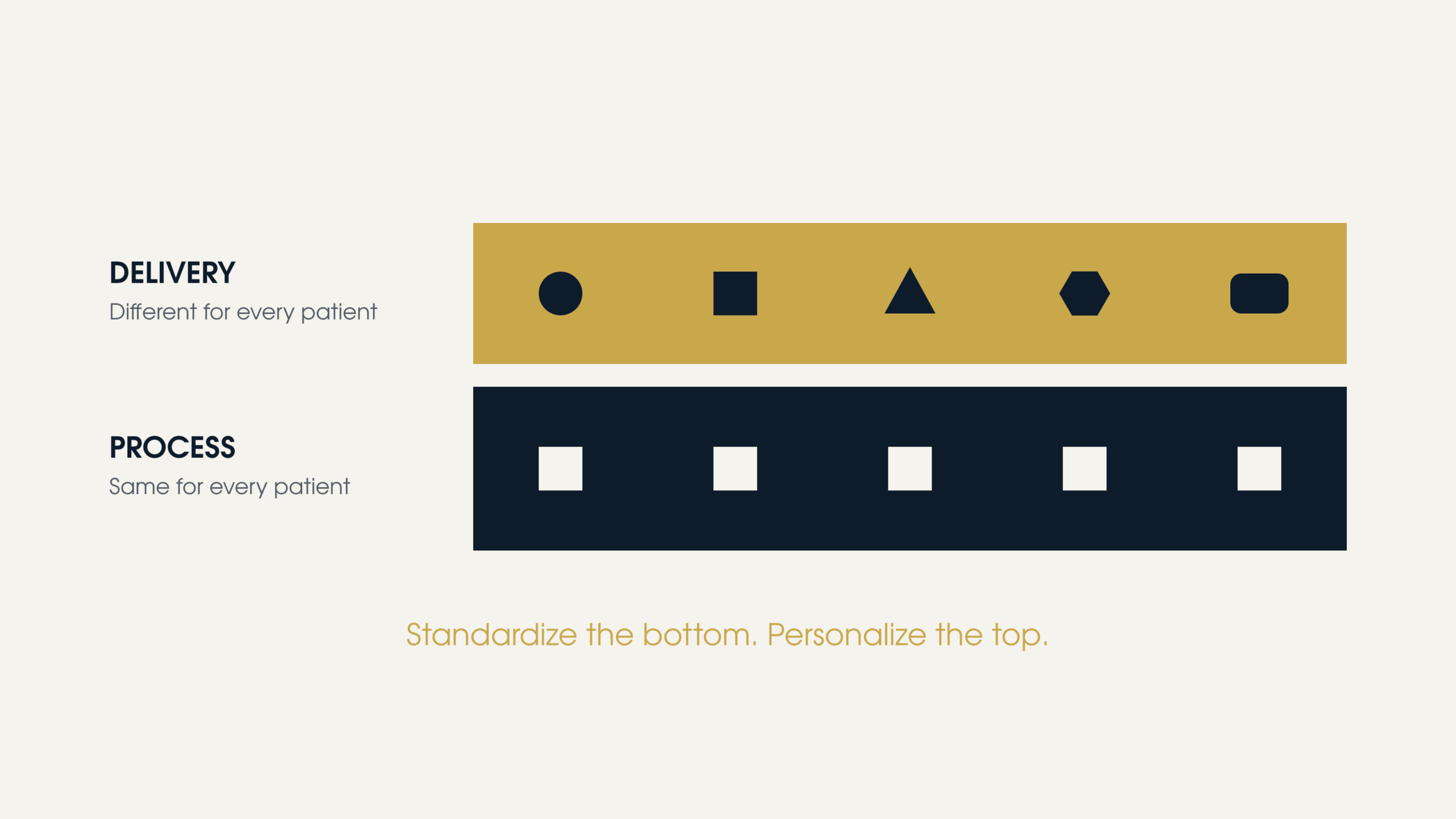
Yes, personalized patient care in dentistry can be standardized, as long as you standardize the process and personalize the delivery. The exam, diagnostics, treatment sequence, and handoffs should run the same way for every patient, while the conversation, pacing, and goals adapt to the person in the chair. Practices get into trouble when they reverse the two.
Why Dentists Think They Have to Choose
Most independent dentists carry a quiet fear about systems. Write everything down, script the front desk, run every new patient through the same sequence, and the practice starts to feel like the DSO down the road. Patients turn into chart numbers, and the reason someone picked a private practice in the first place disappears.
So a lot of practices lean the other way and call it personal care. Each doctor does the exam a little differently. The hygienists explain perio three different ways. The front desk handles a reschedule based on who happens to be working. It feels warm from the inside. From the patient’s side it’s inconsistency, and they notice it faster than the team does.
On my patient experience pillar page, I calls these the two ditches: too regimented on one side, no regimen at all on the other. This page is about the road between them, and which parts of the practice belong in which lane.
Process and Delivery Are Two Different Layers
The choice goes away once you split the practice into two layers.
The process layer is what happens. Which records get taken, what the exam includes, how findings get presented, what order treatment is sequenced in, who hands the patient to whom, and when follow-up happens. This layer should be identical for every patient, on a calm Tuesday and on a chaotic Thursday.
The delivery layer is how it feels. How fast you talk, what you ask about, which worry you address first, how you explain a finding to an engineer versus a nervous first-timer, and whether anyone remembers that her daughter just started college. This layer should be different for every patient.
Health services researchers have a name for this idea: individualized standardization. In their framework, the standard works as a guiding structure that leaves room for individualization inside the conversation between patient and clinician. They describe the failure mode with the Greek myth of the Procrustean bed, where every traveler was stretched or cut to fit the same bed. Arbitrary standardization is forced conformity. In dentistry, that’s the corporate mill.
What to Standardize and What to Personalize
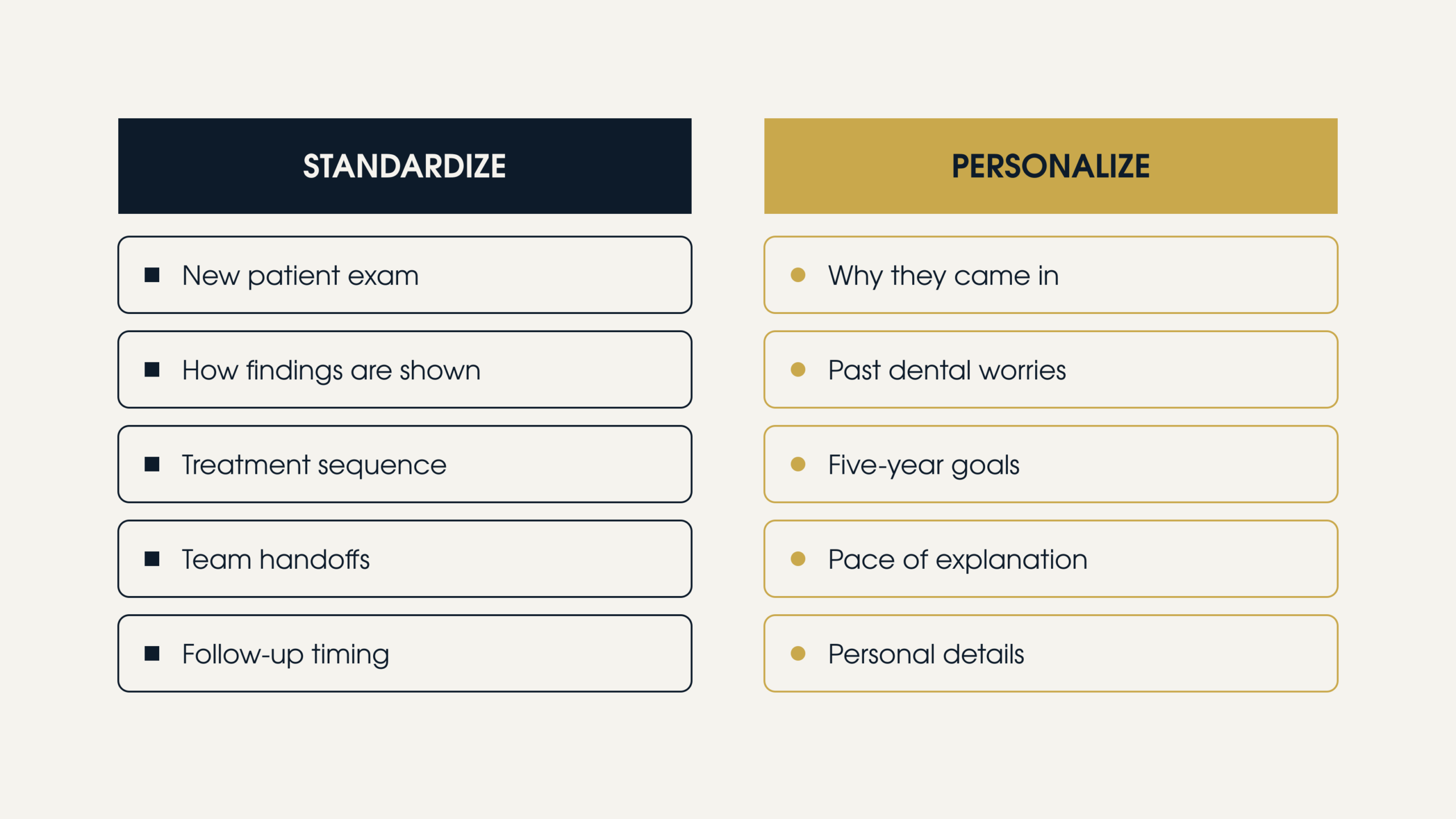
Here’s how the two layers map onto a normal new patient visit.
Standardize the Process
- The new patient exam, including records, photos, and scans, done in full regardless of what the plan reimburses
- How findings get shown, with the patient seeing their own images before hearing a recommendation
- Treatment sequencing, based on clinical priority
- Handoffs between doctor, assistant, hygienist, and front desk, so the patient never has to repeat themselves
- Follow-up timing after a treatment presentation, scheduled rather than remembered
Personalize the Delivery
- Why the patient came in today, in their own words
- What bothered or scared them about past dental visits
- What they want their mouth to look and feel like in five years
- The pace and depth of every explanation
- The personal details that make someone feel known, written in the chart so the whole team can use them
The first list protects outcomes. The second list earns the trust that lets the first list happen.
The Expensive Mistake: Personalizing the Wrong Layer
Most practices don’t fail because they chose systems or chose warmth. They fail because they personalize the process and standardize the delivery.
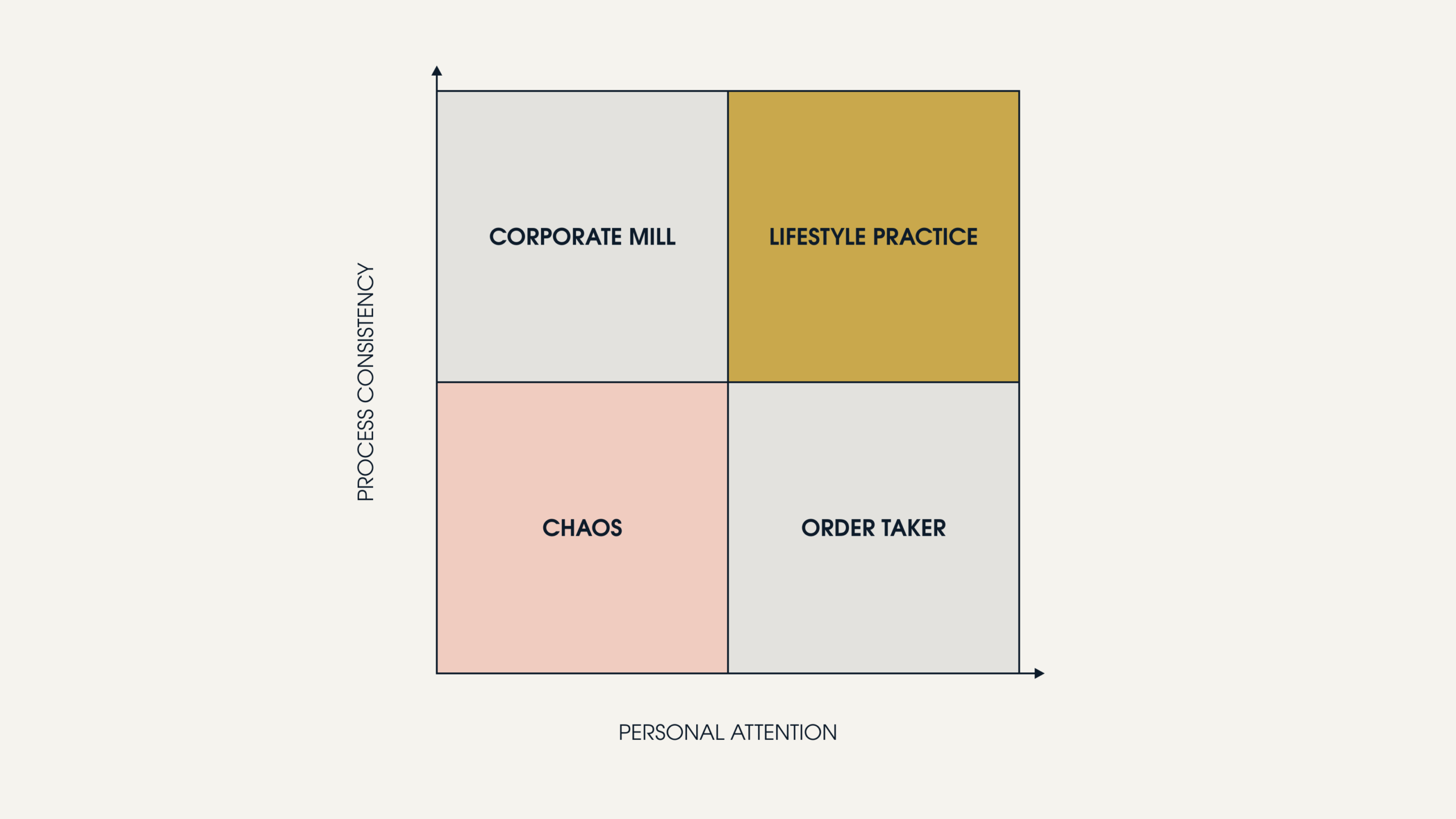
Personalizing the process looks kind in the moment. The patient seems tight on money, so the doctor doesn’t mention the cracked molar. The plan only pays for a limited exam, so a limited exam is what the patient gets. The schedule is running behind, so the photos get skipped just this once. Every one of those decisions gets made patient by patient, which means the diagnosis now depends on the doctor’s guess about someone’s wallet. That isn’t personal care. It’s the order-taker ditch with good manners, and it’s exactly where insurance quietly takes over the process.
Standardizing the delivery looks efficient. Every patient hears the same perio speech at the same speed, gets asked the same two small-talk questions, and walks out with the same handout. The clinical process might be excellent, but nobody feels seen, so the trust that complex treatment depends on never builds. That shows up later as a no.
What the Research Shows
A study across 38 dental clinics compared patients who received a standardized, patient-centered cleaning process with patients who received non-standardized care. Among 826 patients, the standardized group reported average satisfaction scores of 4.74 versus 3.34, and average return intention of 4.77 versus 4.10.
The detail that matters is what the standard contained. It wasn’t a checklist done to the patient. The process was built around the clinician communicating with the patient at every step. Satisfaction went up because the conversation was part of the standard.
Two caveats are worth stating plainly. The study took place in one city in China, and it was a cross-sectional survey, which the authors say limits cause-and-effect conclusions. Treat it as strong supporting evidence rather than proof.
Medicine has a longer track record here. When eight hospitals introduced the WHO surgical safety checklist, major complications fell from 11% to 7% and inpatient deaths fell from 1.5% to 0.8%. The lead researcher’s explanation should sound familiar to any dental team: the checklist worked because it was an active document the whole team used out loud, not a form sitting on a desk. A written process nobody uses changes nothing, which is the same lesson behind setting standards patients follow.
How to Build Personalization Into the System
Personalization has to be part of the process. If it depends on who’s working that day, it isn’t a system, it’s luck.
Ask the Same Opening Question Every Time
Pick one question every new patient hears before anyone talks about teeth. Something like: “What made you decide to come in now, and what would a great outcome look like for you?” The question is standardized. The answer is the most personal information you’ll collect all year.
Give Personal Details a Place in the Chart
Create a dedicated field for the non-clinical notes. The daughter in college, the wedding in June, the bad experience with a previous dentist. If those details only live in one hygienist’s memory, they walk out the door when she does.
Review the Delivery Layer in the Morning Huddle
Spend about 30 seconds per patient on the person, not just the procedure. Who’s nervous. Who wanted to ask about whitening before the reunion. Who mentioned their husband’s surgery last time. The team walks into every appointment already knowing who they’re about to see.
Train the Team on Both Layers
Most dental training covers the process. Train the delivery layer too: how to slow down for an anxious patient, how to explain a finding to someone who wants the numbers, and how to notice when a patient has stopped listening.
A Quick Self-Audit
Answer these about your own practice this week:
- Would two new patients with similar mouths get the same exam and the same findings, whatever their insurance?
- Could anyone on the team tell you why today’s third patient came in?
- When the doctor falls behind, what gets cut first, the photos or the small talk?
- Does every new patient hear the same opening question, and does someone write the answer down?
If the first question gets “it depends,” your process is personalized and you’re drifting toward the order-taker ditch. If nobody can answer the second, your delivery is standardized and you’re drifting toward the corporate mill. The third question tells you which layer your practice actually protects under pressure.
Related FAQs
What is personalized patient care in dentistry?
For a practice owner, it means adapting how care is communicated and delivered to each patient’s goals, concerns, and pace, while the clinical process stays consistent. In research settings the term also refers to treatment tailored to a patient’s biology and risk profile.
Does standardizing a dental practice make it feel corporate?
Only if you standardize the wrong things. A consistent exam, diagnosis, and handoff process makes care more reliable. Practices feel corporate when the conversation is scripted and nobody on the team knows anything about the patient beyond the chart.
What should every dental practice standardize?
The new patient exam and records, how findings are shown to patients, treatment sequencing, handoffs between team members, and follow-up timing after a treatment presentation. None of these should change based on insurance, schedule pressure, or a guess about what the patient can afford.
How do you personalize dental care without slowing down the schedule?
Build it into the process. Ask every new patient the same opening question, record personal details in a dedicated chart field, and review them for about 30 seconds per patient in the morning huddle. Personalization then happens on schedule instead of depending on who remembers what.
If you suspect your practice is standardizing the wrong layer, book a Lifestyle Practice Blueprint call and look at where your process bends and where your delivery has gone flat. If you want the full philosophy first, I lay it out in The Four Freedoms of Dentistry, the free book on how DST doctors rebuild the practice around fee-for-service dentistry, lower overhead, and a schedule they own.